We love engaging in outreach. Check out some of the more recent materials. Enjoy!

My guide to common hover flies of Georgia is now live! Check it out here: https://extension.uga.edu/publications/detail.html?number=B1565
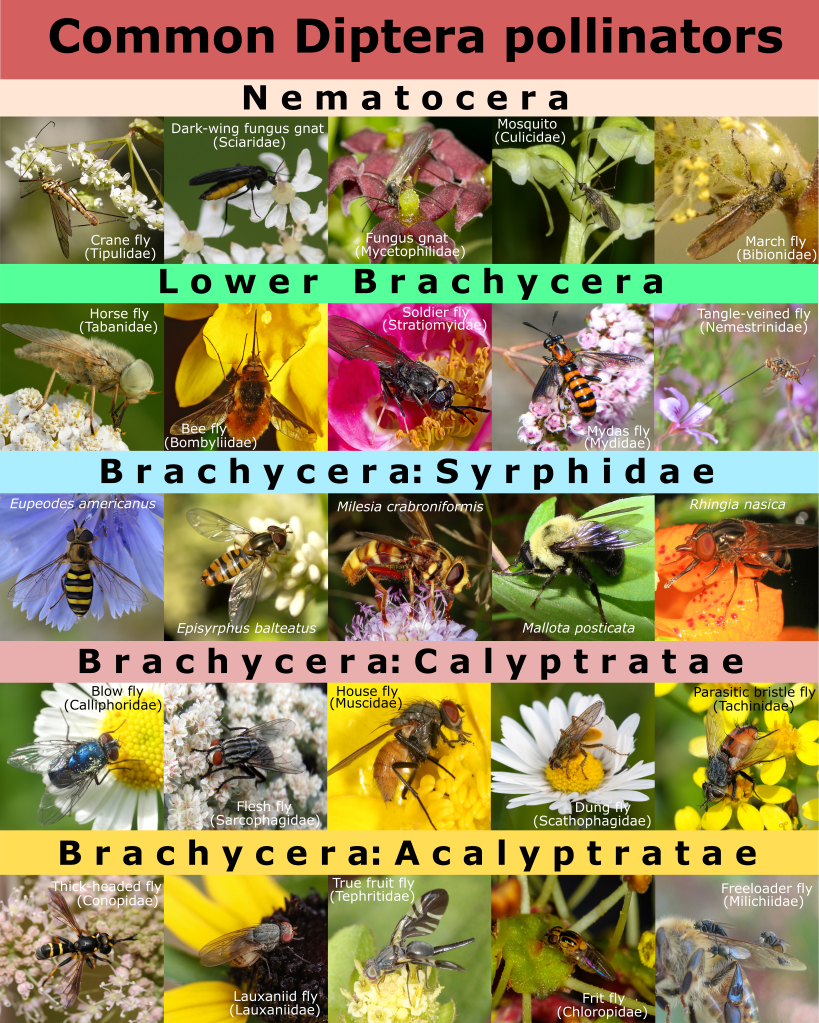
Collage of 25 fly pollinator species, split into five major groupings: Nematocera, Lower Brachycera, Syrphidae, Calyptratae, and Acalyptratae.
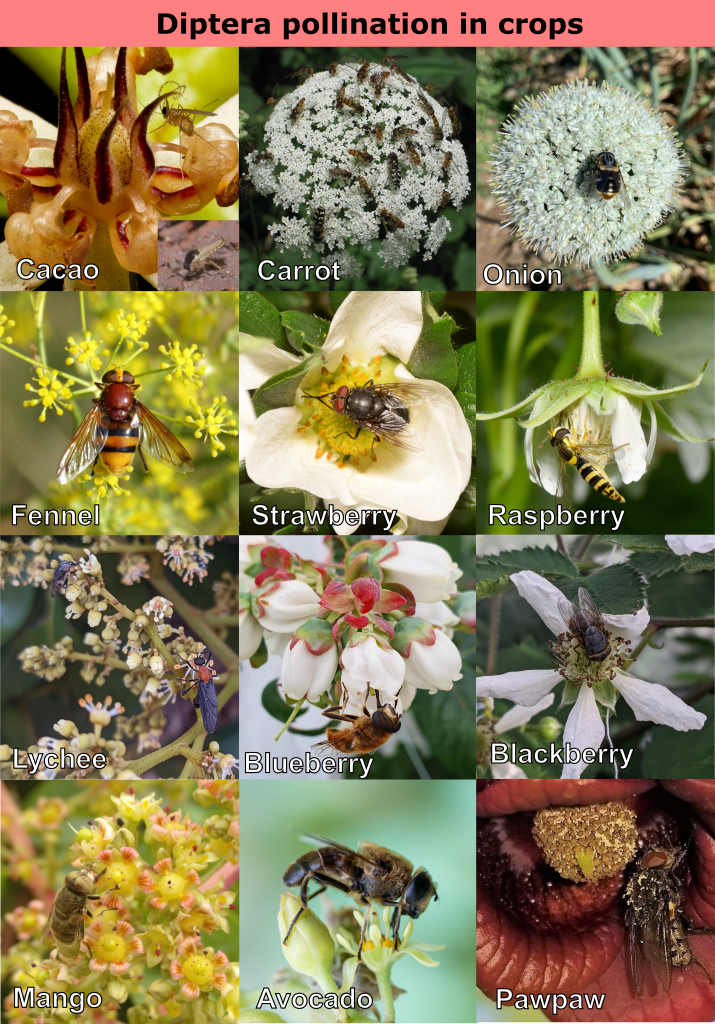
A 3x4 grid collage of photographs showing various crops being pollinated by Diptera insects, with each photo labeled by crop name including cacao, carrot, onion, fennel, strawberry, raspberry, lychee, blueberry, blackberry, mango, avocado, and pawpaw. Each photo highlights different fly species interacting with flowers, emphasizing the role of Diptera in pollination across diverse agricultural plants.
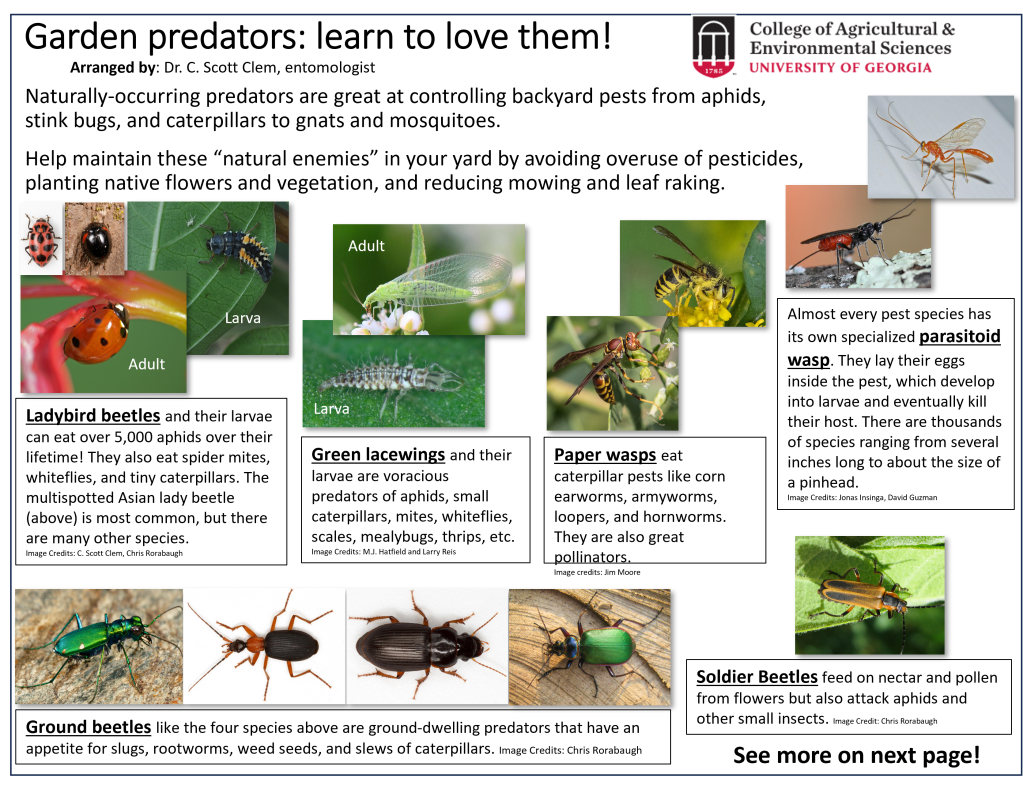
Educational infographic explaining benefits of garden predators in controlling pests like aphids, stink bugs, caterpillars, gnats, and mosquitoes. Features labeled photos of various predators including ladybird beetles, green lacewings, paper wasps, soldier beetles, and ground beetles, with descriptions of their prey and roles, plus a note on parasitic wasps' unique pest control method.
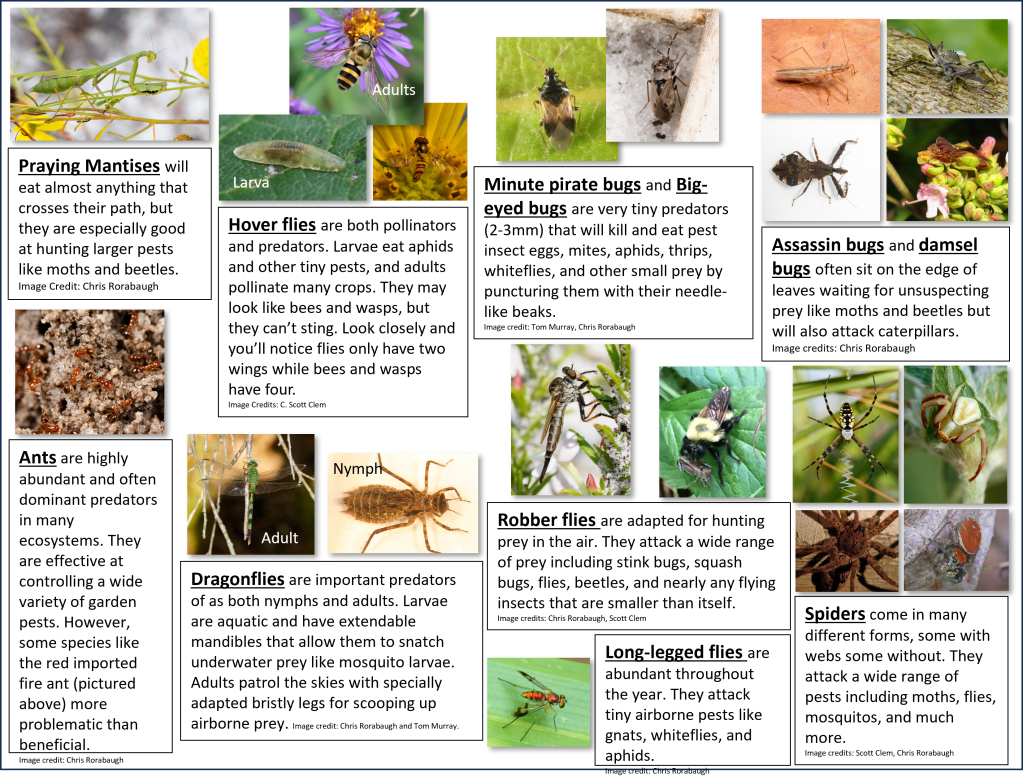
A collage of labeled photographs presents various predatory and pollinating insects, highlighting their roles in ecosystems and pest control. Each section includes images of specific insects such as praying mantises, hover flies, minute pirate bugs, assassin bugs, ants, dragonflies, robber flies, long-legged flies, damselflies, and spiders, with brief descriptions of their behaviors, prey, and ecological importance.
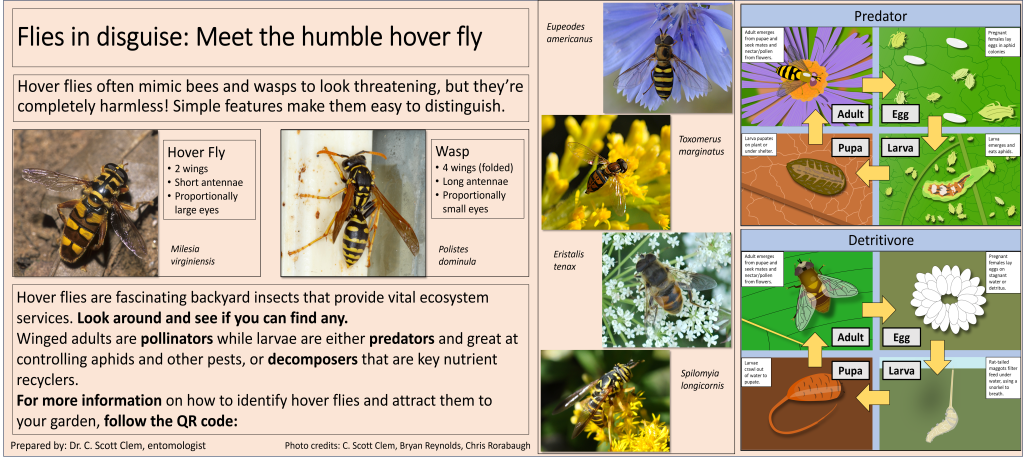
Educational infographic explaining differences between hover flies, bees, and wasps, highlighting hover flies' mimicry for protection despite being harmless. Features labeled photos of hover fly, wasp, and bee species, a color-coded lifecycle chart for predator and detritivore roles, and key identification traits like wing count and antenna length.
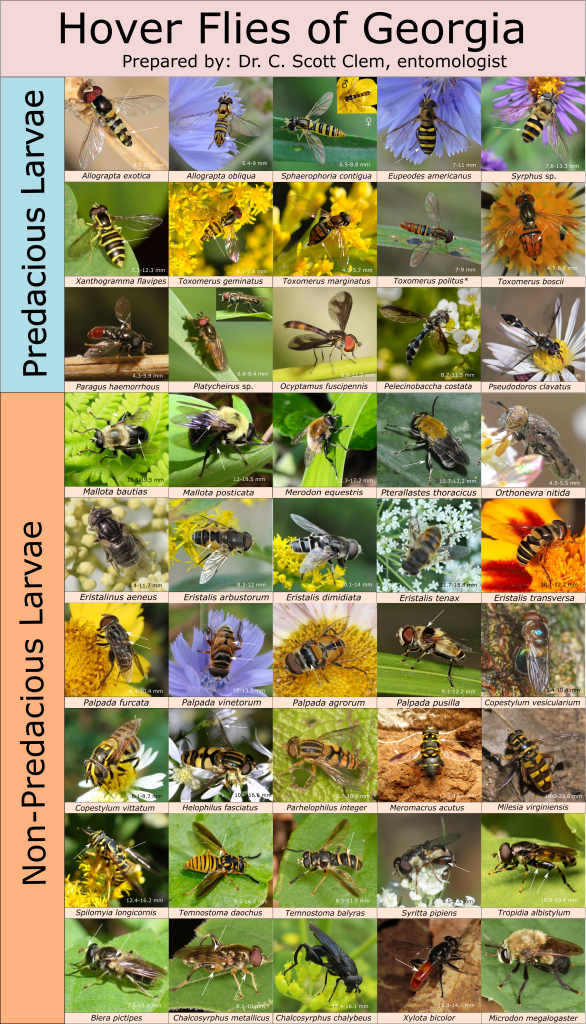
Chart titled "Hover Flies of Georgia" categorizes various hover fly species into two groups: Predacious Larvae and Non-Predacious Larvae, with each species represented by labeled photographs arranged in a grid. The chart uses a pink background for Predacious Larvae and an orange background for Non-Predacious Larvae, highlighting diverse species with clear images and scientific names for identification and educational purposes.
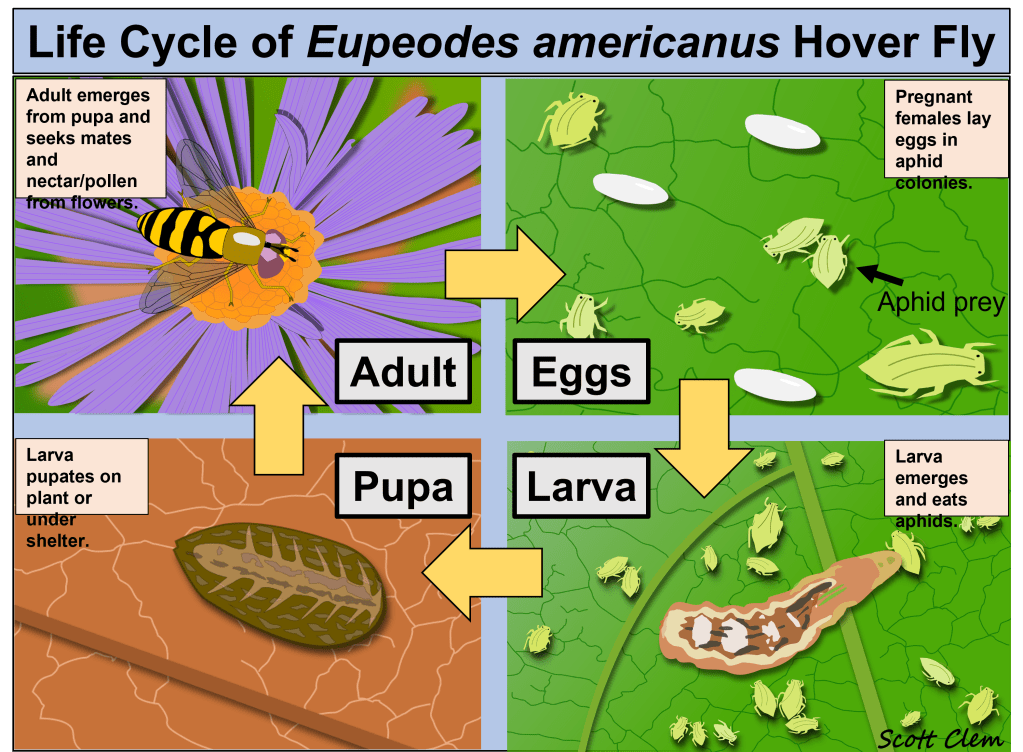
Diagram illustrating life cycle of Eupeodes americanus hover fly with four labeled stages: eggs, larva, pupa, and adult. Colorful illustrations show eggs laid in aphid colonies on green leaf, larva feeding on aphids, brown pupa on leaf underside, and adult hover fly on purple flower collecting nectar.
Diagram illustrating life cycle of Eristalis tenax hover fly with four labeled stages: egg, larva, pupa, and adult. Each stage includes a colored quadrant with an illustration and brief description of behavior, such as eggs laid on stagnant water, larvae using snorkels to breathe underwater, pupae emerging from water, and adults seeking nectar and mates.