Research Areas
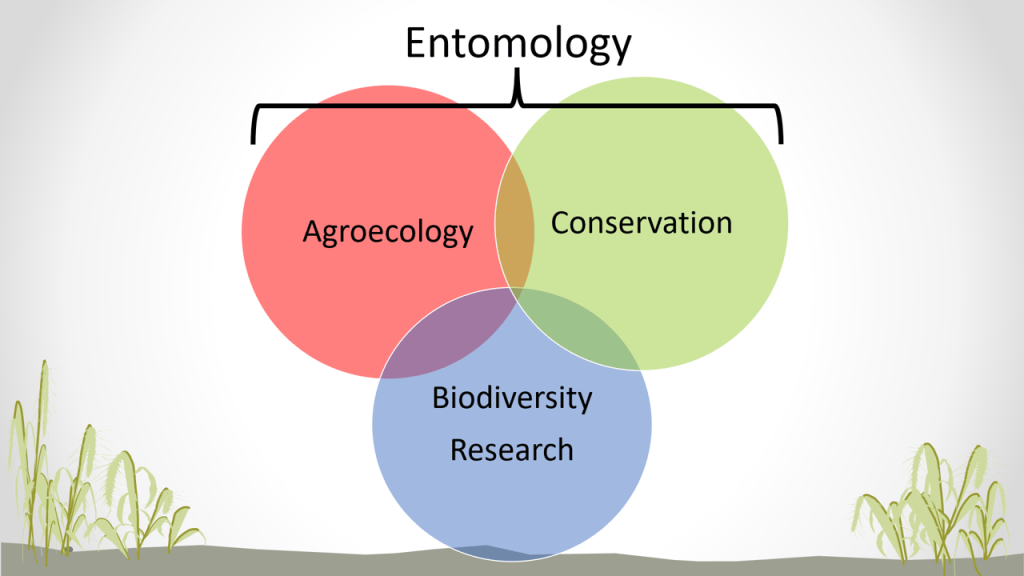
Our overall research “space” is that which lies at the intersection of agroecology, conservation, and biodiversity research, all under the umbrella of entomology.
Fly (Diptera) pollination
Flies (Order Diptera) are highly important yet heavily overlooked pollinators. These insects visit at least 72% of the world’s crops and contribute hundreds of billions of dollars in global revenue. Our lab is currently working on a number of new projects to better understand the pollination ecology and conservation significance of these crucial insects.
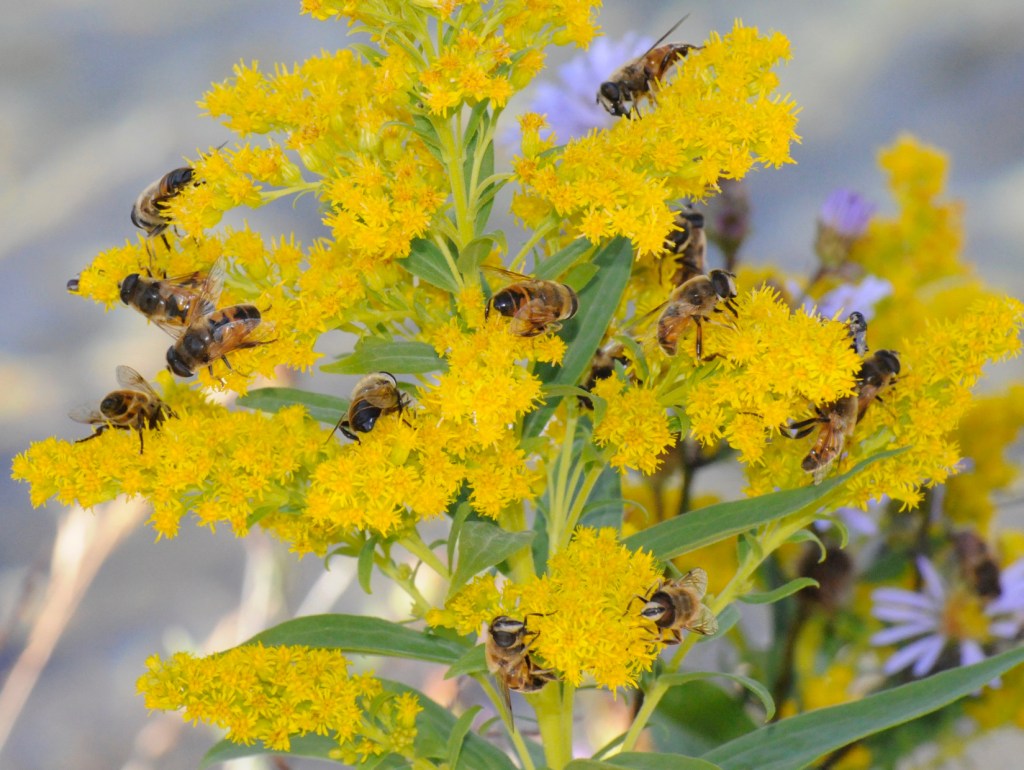
Pictured below: Eristalis tenax drone flies visiting goldenrod flowers. Image credit: Elizabeth Jones.
Insect migration
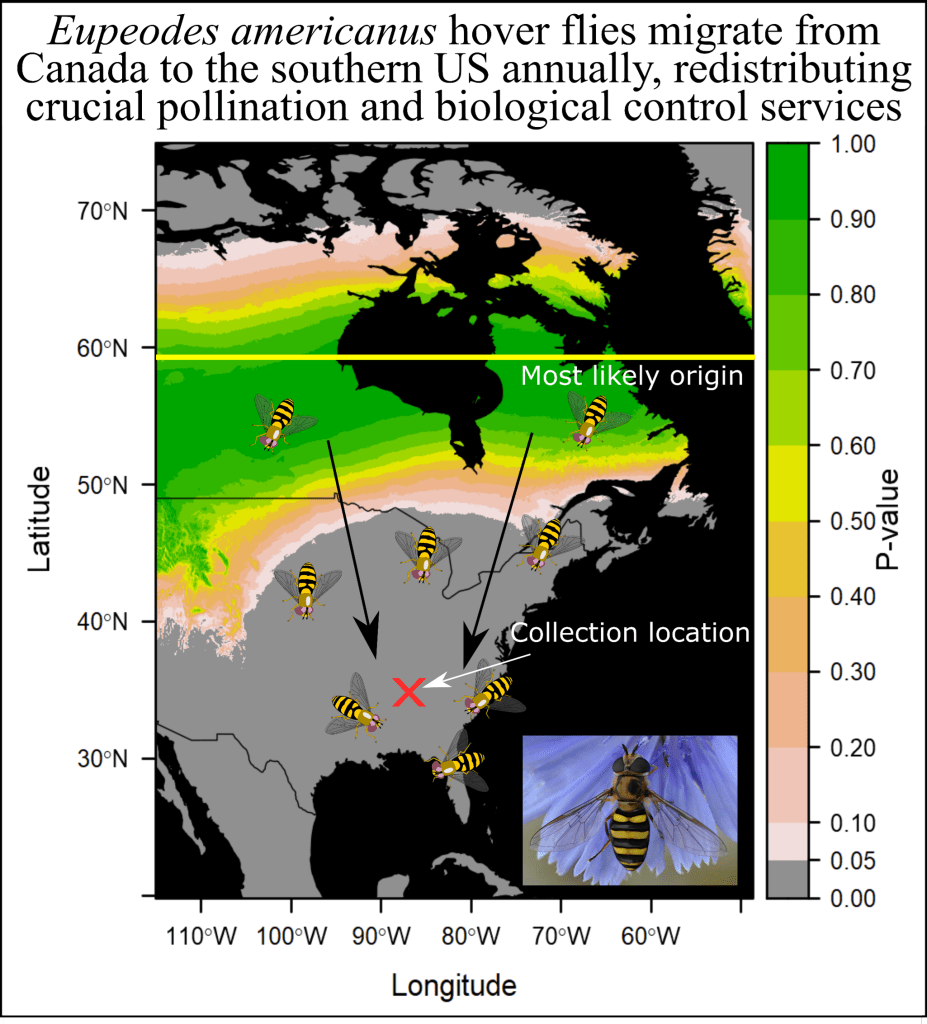
Many insects are known to exhibit long-distance, seasonal migration, and we are just beginning to uncover the true extent of these phenomena. Much of Dr. Clem’s research is focused on the long-distance migration of Nearctic hover flies (Diptera: Syrphidae). Using stable hydrogen isotopes, he discovered that common North American hover fly species, such as Eupeodes americanus, migrate from the upper Midwest and Canada to at least the southeastern United States during autumn. Furthermore, there are morphological, behavioral, and physiological mechanisms which may be linked to this. These findings are likely to have major ecological and economic consequences, given that these insects are important pollinators and biological control agents.
For more information, please see these publications: https://doi.org/10.1002/ecm.1542
https://doi.org/10.1111/ecog.06465
The Clem lab will be expanding upon this work to look at the migratory ecology of other insects. Stay tuned!
Agroecology
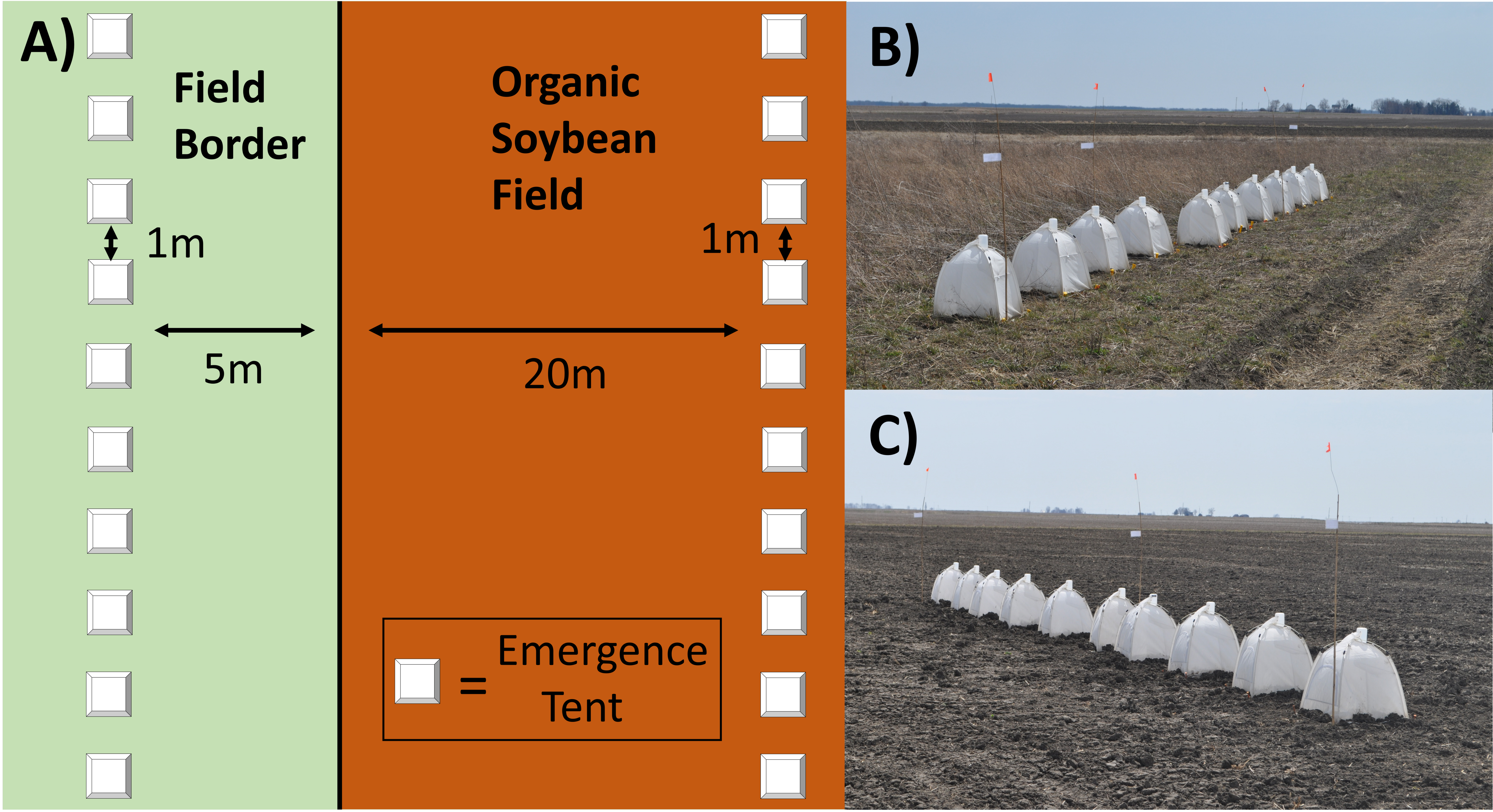
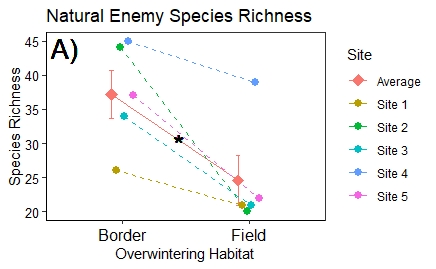
Integrated Pest Management (IPM) is a cornerstone of agricultural sustainability and biodiversity conservation. Therefore, we are working on numerous studies assessing the impacts of cultivation on beneficial insects. In a collaborative study with Illinois organic farmers, our work showed that field borders and non-cultivated habitat is crucial for supporting overwintering biodiversity of beneficial predacious arthropods in agricultural landscapes.
https://doi.org/10.1093/jisesa/ieab027
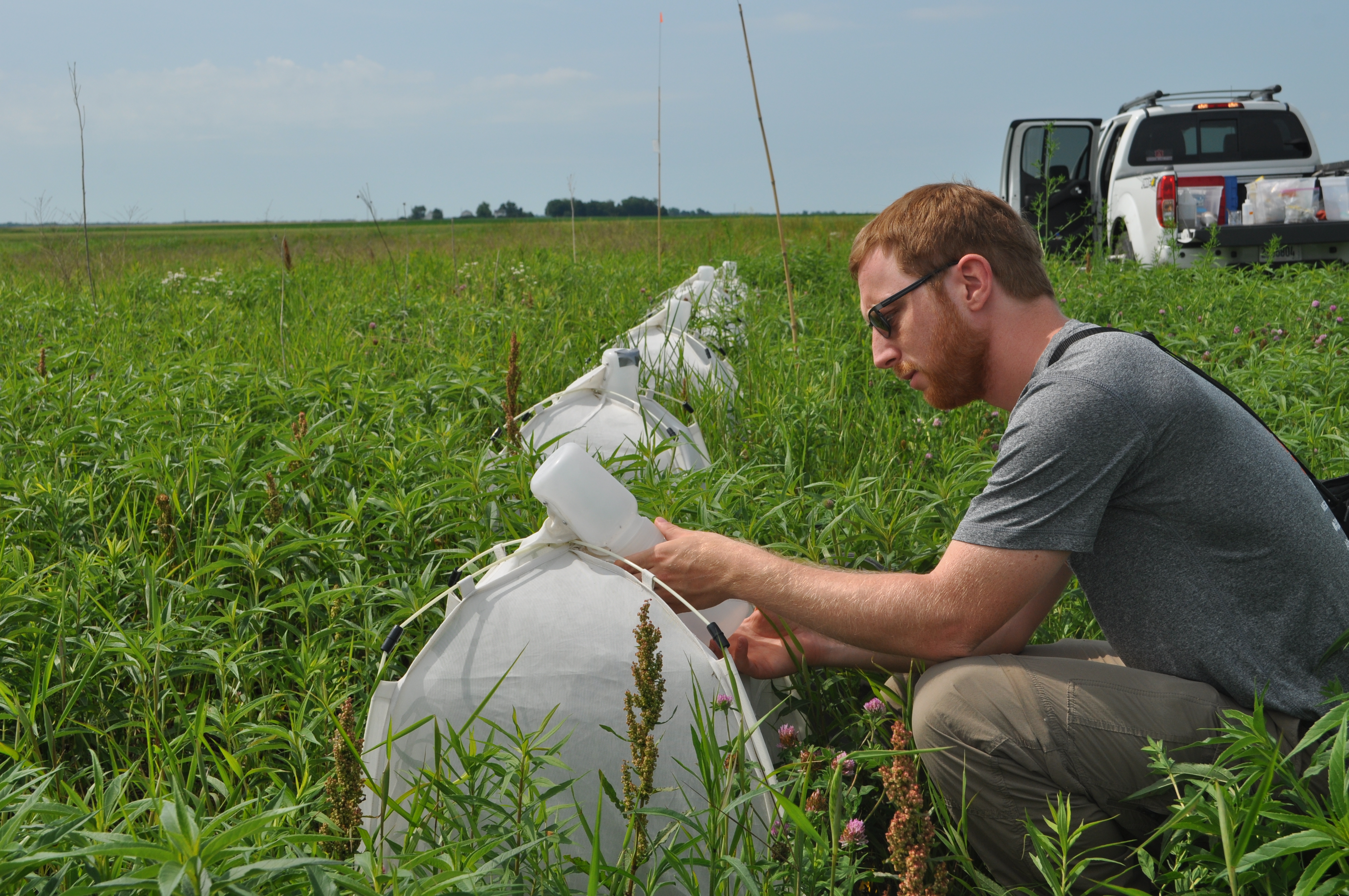
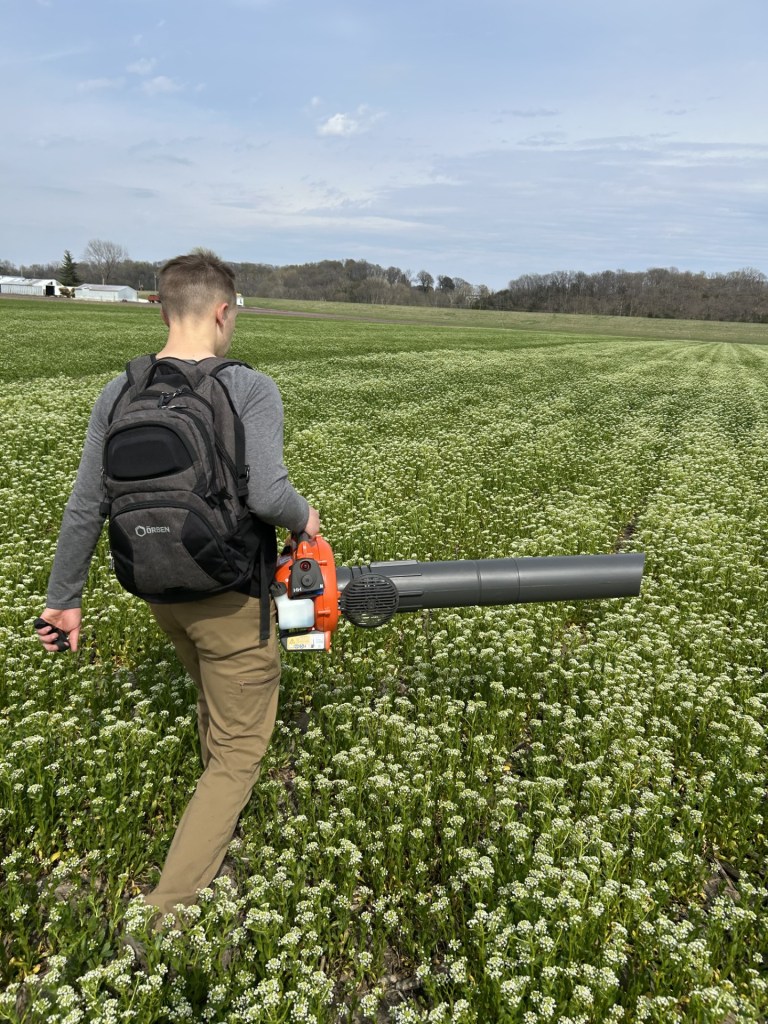
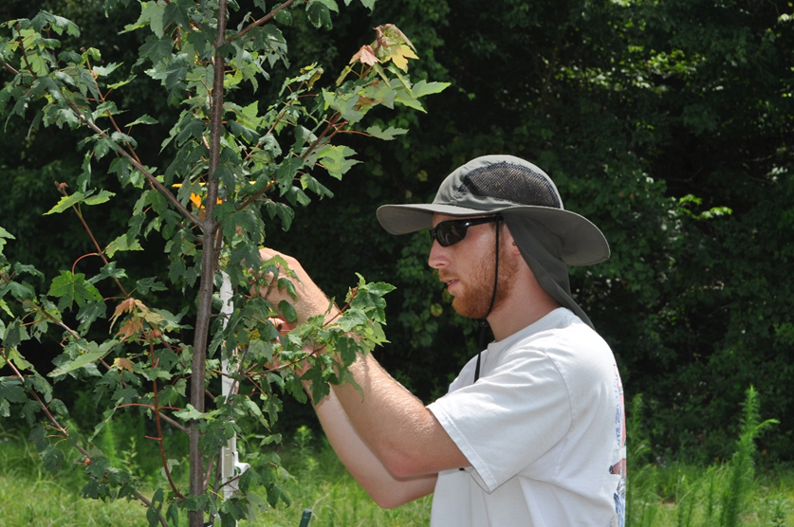
One of the first major projects we are tackling in the Clem Lab is to examine the importance of winter cover crops in retaining insect biodiversity in Midwest agroecosystems. Specifically, we are interested in insect interactions with an up-and-coming cash cover crop known as pennycress. Pictured below is M.S. student Josh Graunke, preparing to sample insects in a pennycress field using a D-vac.
Biodiversity, faunistics, and collections research
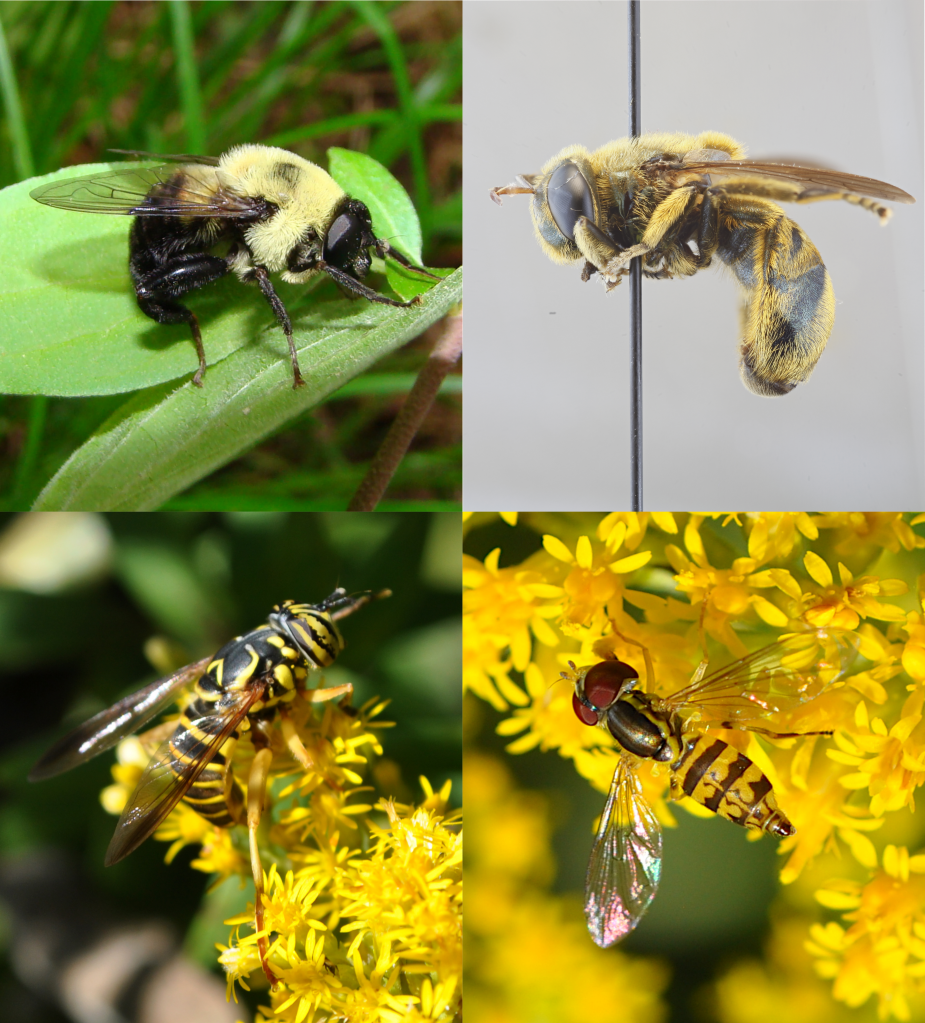
Understanding insect biodiversity and taxonomy is key foundation to ecological research. Much of Dr. Clem’s research involves the curation of insect collections and production of large specimen datasets. These data offer a wealth of information which can be used to answer a wide variety of scientific questions. Through the Illinois Natural History Survey, he has worked to curate nearly 20,000 Illinois hover fly specimens. Data from these insects were then combined with other datasets (including iNaturalist), to gain perspectives on knowledge gaps, range expansions, and species of potential conservation significance (see the below publication). Currently Dr. Clem is working to complete a publication on the hover flies of Georgia, and he has produced an extension publication that outlines common species endemic to the southeastern US.
Hover flies of Georgia Extension Publication: https://fieldreport.caes.uga.edu/publications/B1565/common-hover-flies-of-georgia-an-introductory-guide/
Hover flies of Illinois: https://doi.org/10.1093/jisesa/iead051
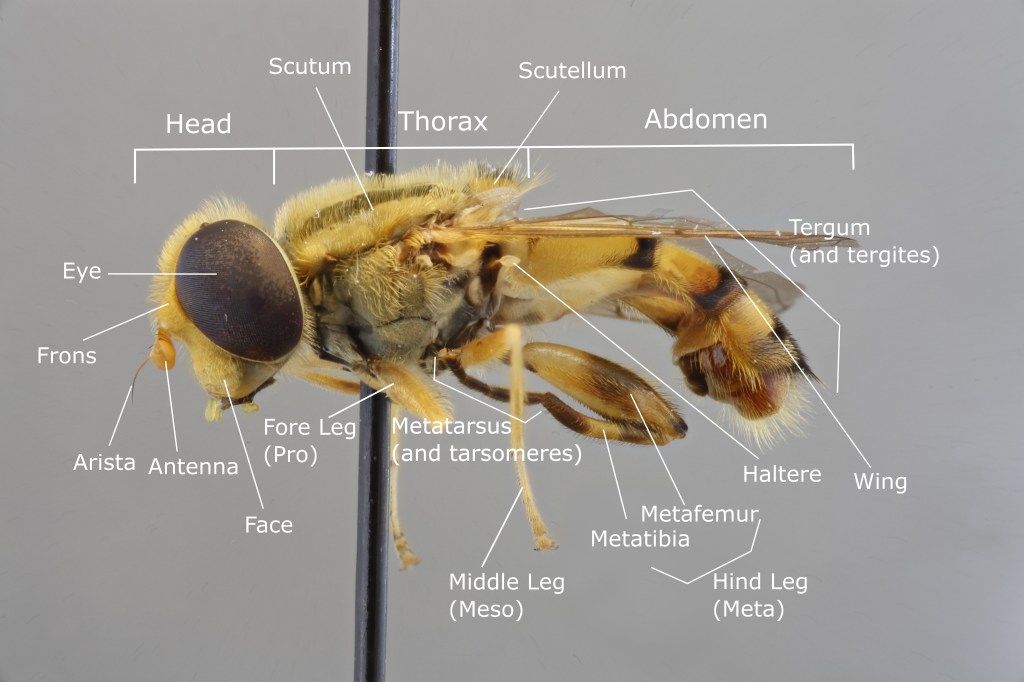
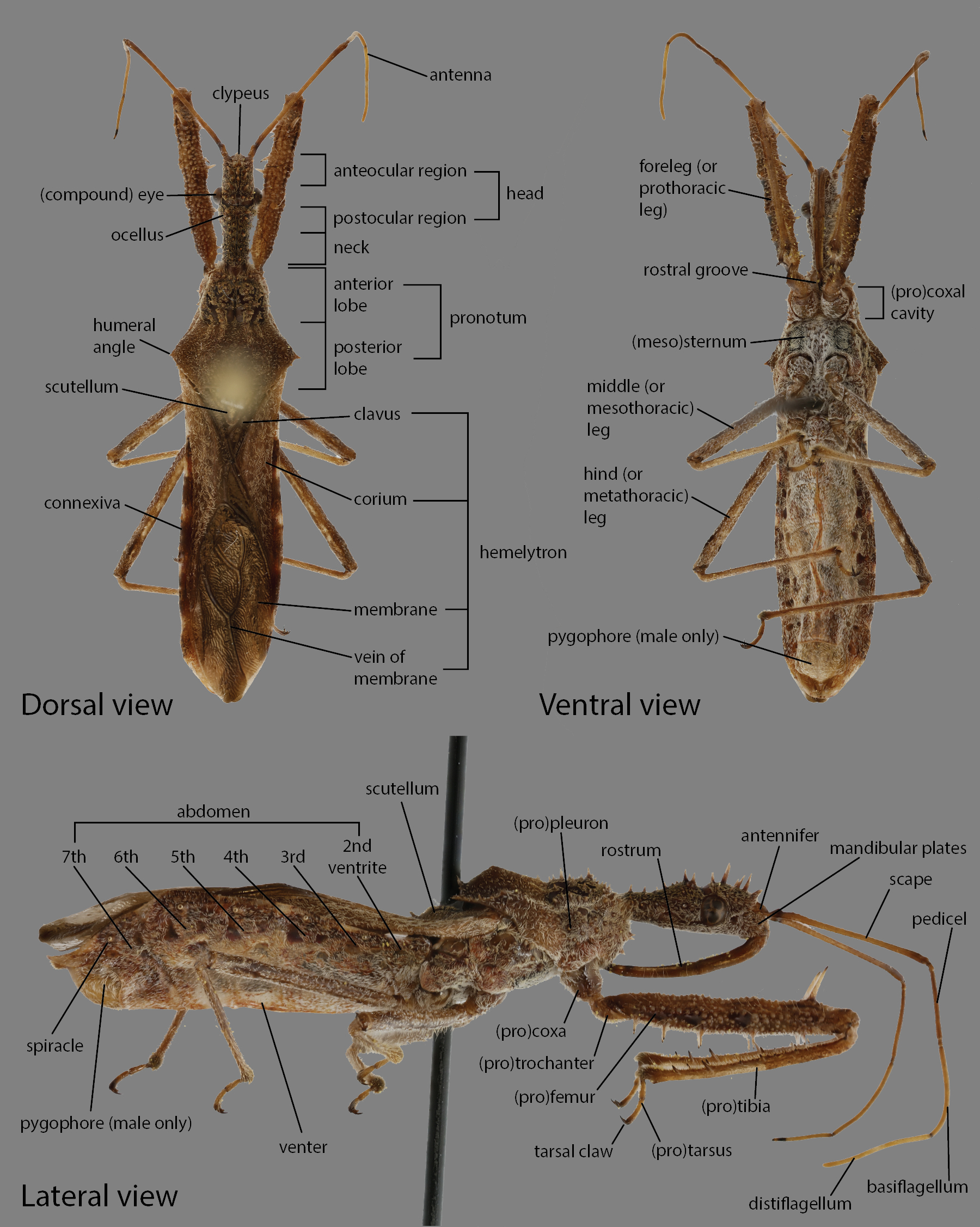
During his time at Auburn University, he did similar projects with the Auburn University Museum of Natural History to produce works on assassin bugs (Reduviidae) and broad-headed bugs (Alydidae) of Alabama. This culminated in two publication, one of which includes an extensive dichotomous key to 61 assassin bug species.
Assassin bugs of Alabama: https://doi.org/10.11646/zootaxa.4688.2.1
Broad-headed bugs of Alabama: https://doi.org/10.15560/12.5.1974

Toxicology
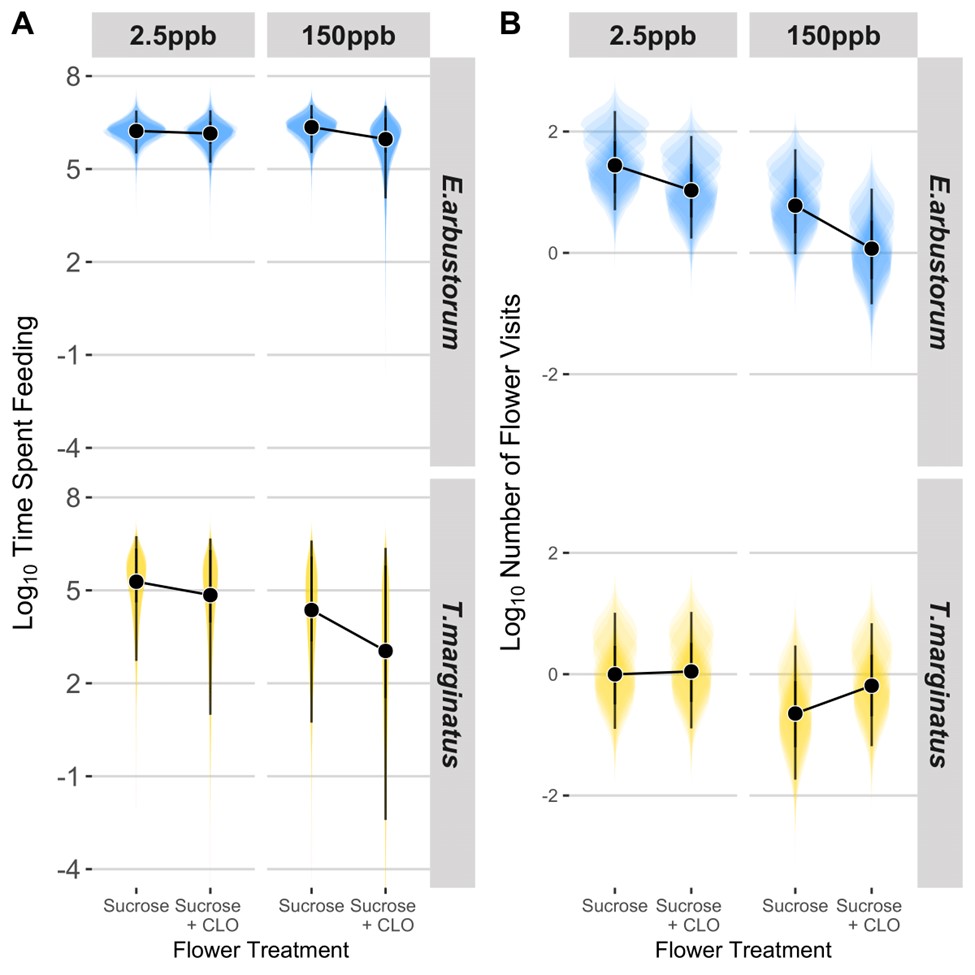
Pesticides play an important role in agricultural production and agroecology. One perpetual topic of concern is how insecticides impact beneficial insects, such as pollinators and predators. In one study led by an undergraduate mentee, we found that hover flies may be capable of detecting the neonicotinoid insecticide clothianidin in nectar resources.
For more information, please see this publication: https://doi.org/10.1371/journal.pone.0234820

Native Plant Conservation
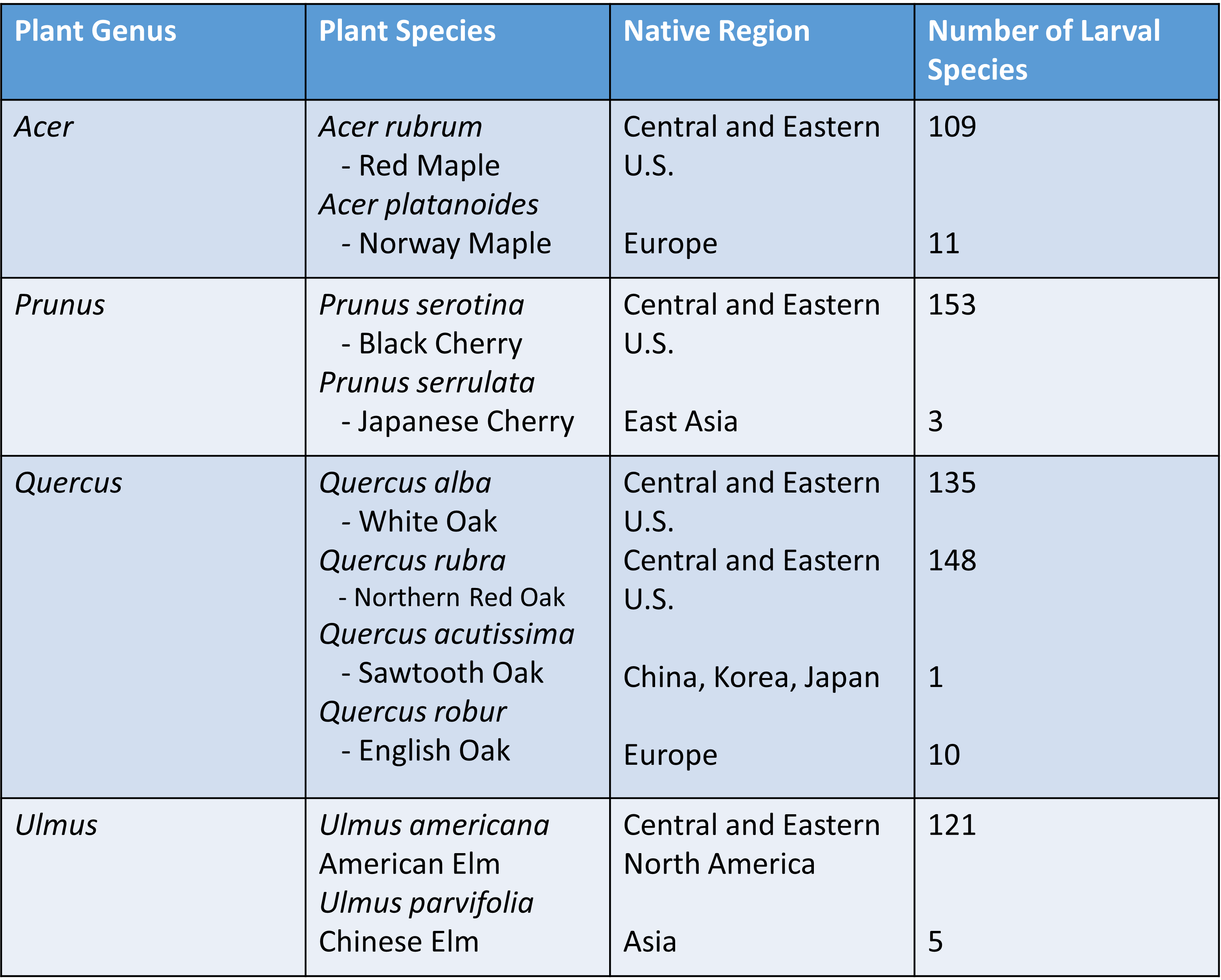
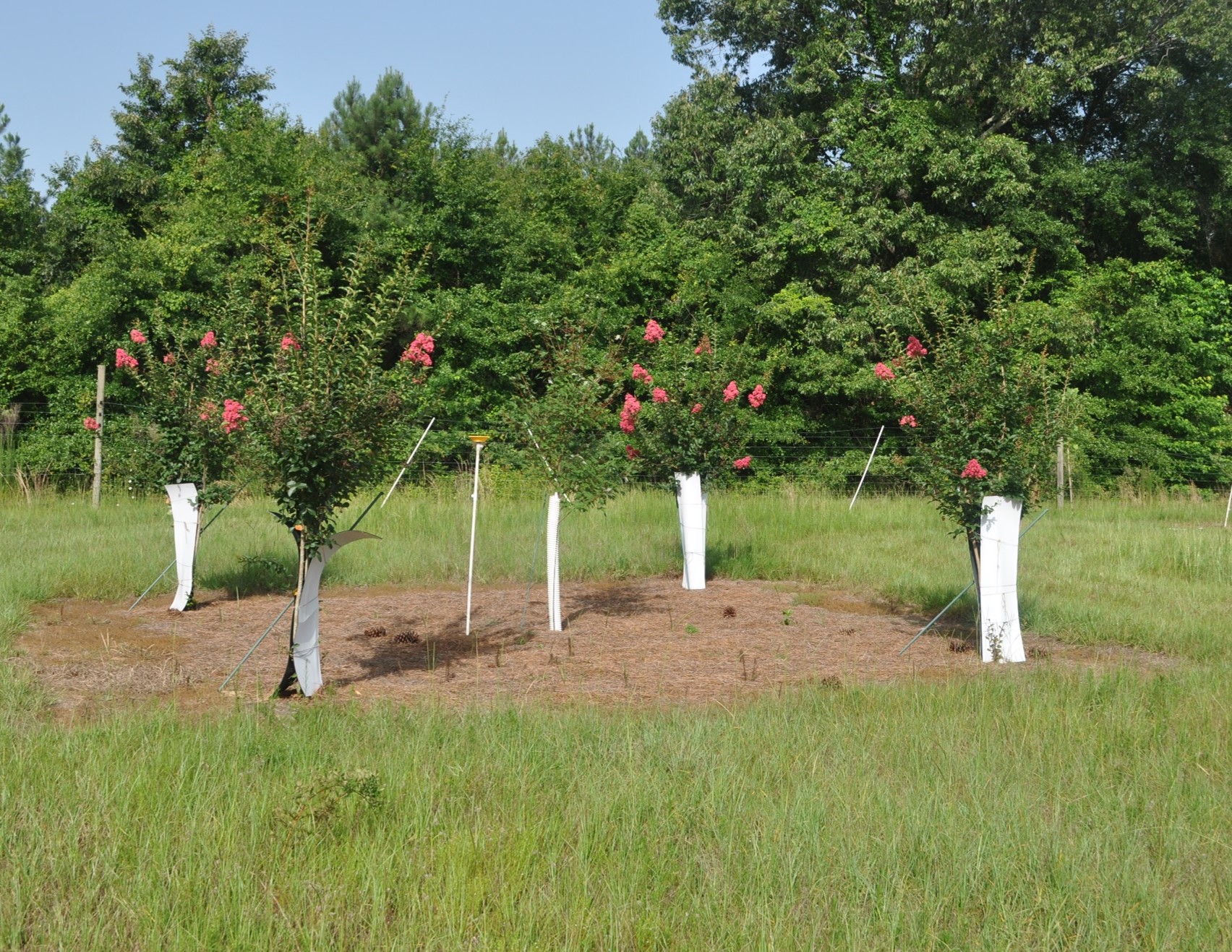
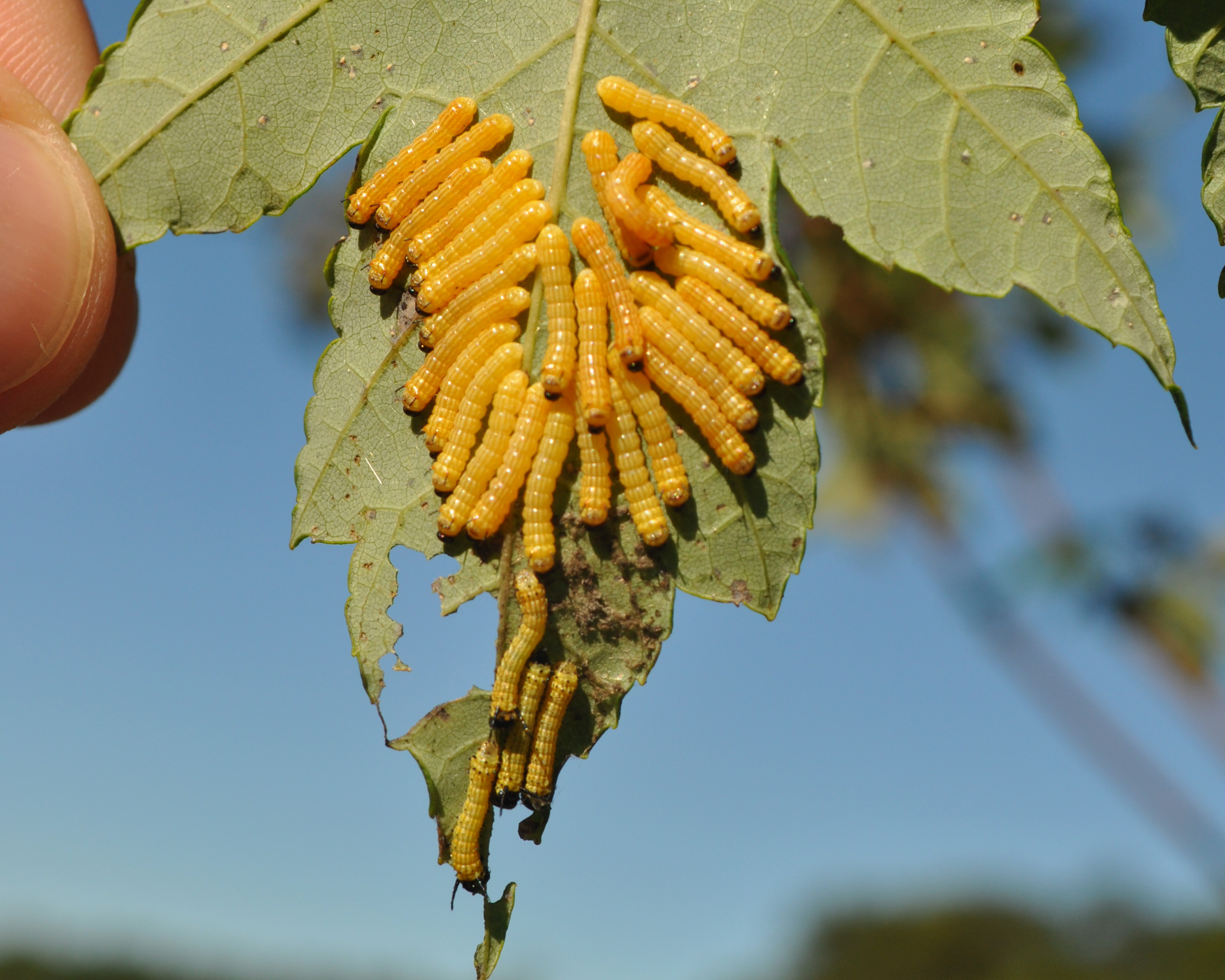
During Dr. Clem’s time at Auburn University under Dr. David Held, he examined the impacts of native trees on insect biodiversity in suburban landscapes. He first published a review that compared caterpillar host records on native and non-native trees, finding that native trees could support nearly 5x as many species as non-native trees. He then conducted a massive common garden experiment involving some 300 saplings, exploring the associational interactions between native and non-native plants. Here, he planted trees in different configurations, mixing native and non-native species. He found evidence of ‘island’ or ‘funnel’ effects when native trees are surrounded by non-native trees, suggesting that native plants planted in a sea of non-natives may incur greater damage and stress compared to natives mixed with other natives. These studies emphasize the importance of native trees in enhancing biodiversity and upholding ecosystem stability in urban and suburban environments.
https://doi.org/10.1093/ee/nvy071
https://doi.org/10.1007/s10841-015-9815-0
 Clem Insect Ecology and Biodiversity Lab